How to Plan a Fight Gym in South Africa
Opening a fight gym is not just about buying equipment and filling a room. The strongest facilities are planned properly from the start.
A serious fight gym needs to work on multiple levels at once. It needs to support coaching, movement flow, class structure, safety, durability, and the overall experience of the people training in the space. If those things are not considered early, you usually feel it later in the form of awkward layout decisions, wasted spend, poor traffic flow, and equipment that does not suit the actual training environment.
If you are planning a fight gym in South Africa, the smartest approach is to think in terms of a full training environment rather than a shopping list. That means looking at the facility as a whole: the type of combat training you offer, the way the space needs to function, the flooring requirements, the equipment mix, and the practical realities of day-to-day use.
Start With the Type of Fight Gym You Want to Build
Not every fight gym should be planned the same way.
A boxing-focused facility will have different layout and equipment requirements from an MMA gym, a BJJ academy, or a hybrid combat-and-conditioning space. Before you start comparing products, you need clarity on the training model.
For example, you should define:
- whether the gym is focused on boxing, MMA, Muay Thai, BJJ, or mixed programming
- whether the business model is built around classes, private coaching, open mat use, or competitive team training
- whether the facility will include strength and conditioning zones
- whether you need ring space, bag space, mat space, or all three
- whether the gym is built for beginners, general fitness members, competitive athletes, or a mix
This matters because the best fight gym layout is always driven by the way people will actually train in the space.
A facility built around group striking classes needs different spacing and bag planning from a grappling-heavy academy. A performance-driven fight gym may also need to integrate sleds, racks, conditioning tools, and recovery or coaching areas. The earlier you define that vision, the easier it becomes to make the right fit-out decisions.
Think About the Space Before You Think About the Equipment
One of the most common mistakes in a boxing gym setup or MMA gym fit-out is jumping straight to product selection before understanding the space itself.
Before choosing equipment, assess:
- total square meterage
- ceiling height
- pillar placement
- entrance and reception flow
- ventilation
- natural light
- changeroom access
- storage opportunities
- high-impact areas
- where noise and traffic will concentrate
In smaller facilities, layout discipline matters even more. It is very easy to overcrowd a fight gym with too many bags, too much equipment, or badly positioned training zones. The result is a space that feels messy, difficult to coach in, and frustrating to use.
The goal should be to create a facility that feels deliberate and functional. A good fight gym should have a strong sense of flow. Members should be able to move between warm-up, technical work, bag work, partner drills, sparring, conditioning, and cooldown without constant congestion.
Get the Flooring Right Early
Flooring is one of the most important decisions in any fight gym, and it should never be treated as an afterthought.
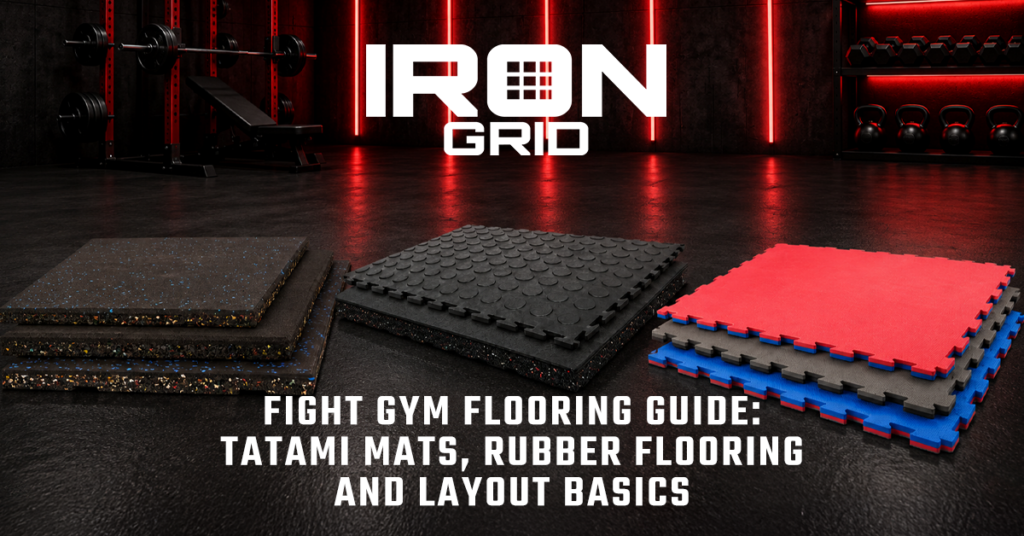
Different fight disciplines place different demands on the ground surface. Boxing, grappling, pad work, conditioning, and mixed classes all create different needs. In many cases, the best solution is not one flooring type across the whole facility, but a combination of surfaces used strategically.
Some gyms may need:
- tatami mats for grappling and takedown work
- rubber flooring for heavy-use conditioning zones
- dedicated ring surfaces
- mat areas for drilling and movement work
- transition zones between training areas
This is why fight gym flooring needs to be planned together with the layout, not added at the end. If you get this wrong, the facility will feel compromised from the start.
Good flooring choices affect:
- safety
- comfort
- durability
- cleaning and maintenance
- acoustics
- the professional feel of the facility
If you are building a serious combat sports space, flooring should be part of the core planning conversation from day one.
Choose Equipment Based on Training Function
The best commercial fight gym equipment is not necessarily the most equipment. It is the right mix for the way the facility will actually be used.
A serious fight gym may include:
- heavy bags
- wall-mounted bags or freestanding bag stations
- boxing ring or training ring
- grappling mats
- coaching pads and shields
- gloves and protective equipment
- storage systems
- benches or seating areas
- conditioning tools such as rowers, air bikes, sleds, ropes, kettlebells, and dumbbells
- strength equipment where relevant
The key is balance.
If the gym is too heavily weighted toward one training mode, it can limit programming flexibility. If it is overfilled with miscellaneous equipment, it can lose its identity and feel confused. A strong fight gym should feel purpose-built.
When planning your equipment mix, ask:
- what equipment is essential to the core training model?
- what equipment will be used daily?
- what equipment supports revenue-generating classes or coaching?
- what equipment improves the member experience?
- what can be added later without compromising the facility launch?
That last question is important. Not everything has to be installed on day one. In many cases, it is better to launch with the right foundation and add secondary pieces over time than to overspend on equipment that does not serve the core training environment.
Plan for Coaching, Flow, and Visibility
Fight gyms are working environments. Coaches need to be able to see what is happening, move easily through the space, and control sessions without layout friction.
That means the gym should be designed for:
- clear sightlines across the floor
- logical class flow
- enough space between bags and training lanes
- clean separation between grappling, striking, and conditioning zones where needed
- safe circulation around rings, mats, and equipment
A good layout also improves the member experience. A fight gym that feels cramped, confusing, or chaotic can create a poor first impression, even if the equipment itself is good.
This is especially important if your gym wants to attract a broader market, including beginners, women’s classes, youth classes, or premium private clients. The space still needs to feel serious, but it also needs to feel structured and welcoming.
Build for Durability, Not Just Launch Day
A fight gym is a high-impact environment. Equipment, flooring, wall finishes, storage, and layout decisions all need to hold up under repeated use.
That is why it is important to think beyond launch day and ask:
- what will still perform well after a year of hard use?
- what will be easiest to maintain?
- what surfaces will show wear fastest?
- where will storage become a problem?
- which items need commercial-grade durability from the start?
A fight gym that is planned around long-term use will usually perform better operationally and present better commercially. It will also reduce the need for reactive fixes once classes are underway.
Think Like a Facility, Not a Product Buyer
One of the biggest differences between a serious fight gym project and a weak one is mindset.
Weak projects are often approached like retail purchases. The owner tries to assemble the space piece by piece, product by product, often without a clear view of how it all needs to work together.
Stronger projects are approached like facility builds.
That means thinking about:
- layout first
- flooring early
- equipment in relation to programming
- training flow
- storage
- wear and tear
- member perception
- future growth
That is the difference between a room with fight gear in it and a professional training environment.
What to Plan Before You Request a Quote
Before speaking to a supplier or fit-out partner, it helps to prepare a few basics.
Have clarity on:
- your approximate floor size
- the main combat disciplines you will offer
- whether you want a ring
- whether you need matting, bag zones, or both
- whether you want strength and conditioning included
- the expected member type
- your budget range
- whether the space is a fresh setup, a second branch, or an upgrade of an existing facility
The better defined these inputs are, the easier it becomes to build a useful proposal.
Final Thoughts
Planning a fight gym in South Africa is about much more than choosing bags, mats, and gloves. The best facilities are designed around how they need to function in real life.
That means thinking carefully about layout, flooring, training zones, equipment mix, visibility, durability, and the overall experience of the space. When those elements are aligned, the gym feels stronger from day one and is far easier to operate over the long term.
If you are building a serious fight gym, it pays to approach the project as a complete fit-out rather than a collection of individual purchases.
Planning a serious training space? Talk to Iron Grid about your project.
FAQ
What equipment do I need to open a fight gym?
That depends on the type of fight gym you are building. A boxing gym, MMA gym, or BJJ academy will all need different equipment mixes. Most facilities need some combination of bags, mats, coaching tools, storage, and conditioning equipment.
What flooring is best for a fight gym?
The best flooring depends on the training style. Many fight gyms use a combination of surfaces, including tatami mats for grappling and rubber flooring for conditioning or general-use zones.
How much space do I need for a fight gym?
That depends on the number of members, class format, and equipment plan. The key is not just total space, but how efficiently the layout supports movement, safety, coaching, and flow.
Should I buy all my fight gym equipment at once?
Not always. In many cases, it makes sense to prioritise the core equipment needed for launch and phase in secondary items later, as long as the initial facility plan is strong.