
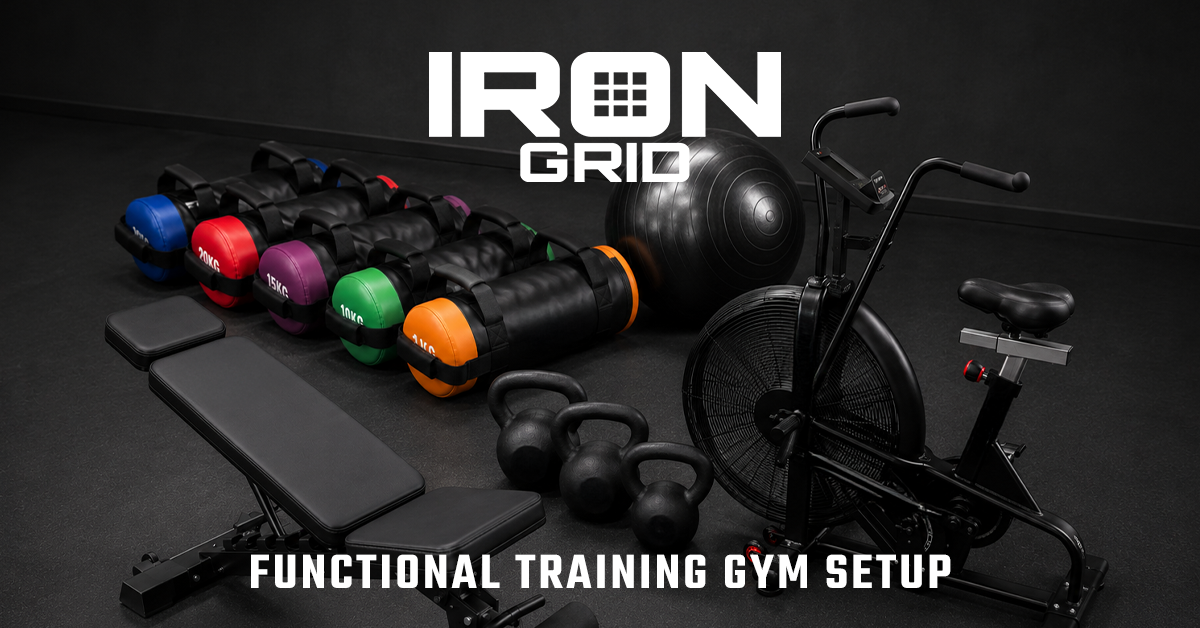
Functional Training Gym Setup: What a Serious Facility Actually Needs
A strong functional training gym is not built by throwing a few sleds, kettlebells, and racks into an open room and calling it complete.
The best facilities are planned with real intent. They are designed around movement, coaching flow, versatility, durability, and the overall experience of the people training in the space. When those things are handled well, the gym feels capable from the moment someone walks in. When they are not, even a space with good equipment can feel awkward, crowded, or unfinished.
If you are planning a functional training gym in South Africa, the goal should be to build a facility that works as a training environment, not just a room full of equipment. That means thinking properly about layout, flooring, equipment mix, traffic flow, and how the space needs to operate every day.
Start With the Type of Functional Facility You Want to Build
Not all functional training gyms are the same.
Some are built around class-based group training. Others are designed for strength and conditioning, personal training, hybrid memberships, or athletic performance. Some lean closer to CrossFit-style training, while others are more refined and structured in a broader commercial environment.
Before selecting equipment, you need clarity on:
- who the gym is for
- whether it is class-led, coaching-led, or open-gym based
- whether the focus is conditioning, strength, performance, or a mix
- how much open movement space is needed
- whether the facility needs to support beginners, athletes, or both
- whether the environment should feel raw, premium, or hybrid
This matters because the right equipment setup depends on the operating model. A group training facility needs different spatial logic from a one-on-one coaching gym. A performance-driven training space needs different priorities from a broad commercial functional zone.
Functional Training Depends on Layout More Than Most Gym Types
In many standard commercial gyms, equipment can sometimes carry the visual impression of the space.
In a functional training gym, layout matters even more.
That is because the facility needs to support movement through space rather than just use of individual stations. Members may be pushing sleds, rotating through circuits, carrying weights, doing bodyweight drills, using racks, or transitioning between conditioning and strength work. If the layout is weak, the whole training experience becomes harder to manage.
A serious functional training facility should be planned around:
- open movement lanes
- clear training zones
- enough room for group flow
- safe spacing between equipment
- coaching visibility across the room
- logical transitions between work areas
- storage that keeps the floor usable
If those pieces are not handled properly, the space can quickly feel cluttered and compromised.
The Core Equipment Categories a Serious Facility Needs
The exact equipment mix will depend on the model of the gym, but most serious functional training spaces need a strong balance across a few key categories.
Racks and Structural Training Stations
Racks often form the backbone of a functional training gym.
These may be used for:
- squats
- presses
- pull-ups
- barbell work
- attachments
- station-based group training
Depending on the facility, the setup may include:
- squat racks
- wall-mounted rigs
- freestanding rigs
- pull-up structures
- modular stations
The right structure helps define the training environment and supports both strength and class functionality.
Free Weights and Strength Tools
Most functional training facilities need a strong free-weight base.
This may include:
- barbells
- bumper plates
- dumbbells
- kettlebells
- benches
- medicine balls
- slam balls
- sandbags
These are often some of the most used items in the entire gym, especially in hybrid facilities where members move between strength work and conditioning blocks.
Conditioning Equipment
Conditioning capacity is usually a central part of the space.
This may include:
- air bikes
- rowers
- ski ergs
- sleds
- battle ropes
- plyo boxes
- jump ropes
- agility tools
The exact mix depends on the training model, but the goal is to support hard work without overcrowding the facility with equipment that does not fit the space.
Open Functional Tools
A serious functional gym should also be able to support dynamic movement and varied programming.
That often means including tools such as:
- resistance bands
- suspension trainers
- rings
- mobility tools
- bodyweight stations
- carry implements
- accessory conditioning tools
These may not dominate the visual identity of the gym, but they often have a major impact on programming versatility.
Open Space Is Not Empty Space
One of the most common mistakes in functional training gym setup is assuming that every square meter needs to be filled.
In reality, open space is often one of the most valuable parts of the facility.
That space may be needed for:
- sled pushes
- warm-ups
- mobility work
- circuits
- partner drills
- classes
- movement transitions
- bodyweight training
A functional gym that is too packed with equipment often loses the very quality that makes it useful. The space should feel active and versatile, not overbuilt.
Flooring Should Support the Way the Gym Trains
Flooring is a major part of a functional gym fit-out and should be planned early.
A serious facility may need flooring that supports:
- high foot traffic
- free weights
- sled work
- conditioning zones
- movement drills
- durability under repeated use
Different parts of the gym may need slightly different treatment depending on the training mix. The important point is that flooring should be planned as part of the full facility layout, not as an afterthought once the equipment list is done.
Good flooring contributes to:
- safety
- acoustics
- durability
- comfort
- visual finish
- equipment performance
In a functional training gym, that matters every day.
Storage Is One of the Biggest Indicators of Facility Quality
Storage is often overlooked when planning a new gym, but in a functional space it becomes especially important.
Without proper storage, the floor quickly becomes messy. That affects:
- member experience
- safety
- class flow
- coaching control
- the visual standard of the facility
Serious facilities usually need storage for:
- plates
- dumbbells
- kettlebells
- bands
- boxes
- medicine balls
- mats
- accessories
- attachments
A well-organised gym feels far more premium and far more usable than one where equipment constantly ends up scattered across the floor.
The Space Must Work for Coaching
A functional training gym is often a coaching-heavy environment.
That means the setup should allow coaches to:
- see members clearly
- move easily through the space
- manage group transitions
- control circuits and class timing
- coach safely around active movement zones
If visibility is poor, lanes are blocked, or stations are positioned without thought, the training environment becomes harder to run. This is one of the clearest differences between a room with equipment in it and a properly planned facility.
Think About Member Experience as Well as Performance
A serious functional training facility should feel hard-working, but it should also feel considered.
That means thinking about:
- how people enter the space
- where they warm up
- where they place their belongings
- whether the floor feels crowded or clean
- how easy it is to move between exercises
- whether the environment feels professional and credible
Even in tougher, performance-driven facilities, member experience still matters. A gym that feels organised, capable, and intentional is usually easier to sell, easier to coach in, and easier to retain members in.
Avoid the Common Mistake of Buying Too Much Too Early
A lot of gym owners overbuy functional equipment in the early stage because it all seems useful.
The result is often:
- too many tools competing for space
- poor training flow
- a confusing facility identity
- underused equipment
- budget wasted on secondary items
A better approach is to prioritise the equipment that supports the core training model first, then add more over time where needed.
That usually means focusing on:
- structural stations
- free-weight essentials
- key conditioning pieces
- flooring
- storage
- enough open space to let the gym actually function
What a Serious Functional Training Facility Actually Needs
Every project is different, but most serious facilities need:
- a strong rack or rig backbone
- quality barbells, plates, dumbbells, and kettlebells
- a smart conditioning mix
- usable open training space
- durable flooring
- clear storage
- enough room for movement and class flow
- a layout designed around coaching and member experience
The right combination depends on the facility model, but the principle stays the same: the space should be built to perform, not just to look equipped.
Final Thoughts
A serious functional training gym is not defined by how much equipment it contains. It is defined by how well the entire facility works.
The strongest spaces are built around movement, training flow, coaching visibility, durability, storage, and equipment that supports the real operating model of the gym. When those elements are aligned, the result is a facility that feels capable, professional, and ready for long-term use.
If you are planning a functional training gym, it pays to think like a facility builder rather than a product buyer. That is what turns a collection of tools into a serious training environment.
Planning a serious functional training facility? Talk to Iron Grid about your project.
FAQ
What equipment does a functional training gym need?
Most functional training gyms need a mix of racks or rigs, barbells, bumper plates, dumbbells, kettlebells, conditioning tools, open movement space, flooring, and storage.
How much open space should a functional gym have?
That depends on the training model, but open space is usually one of the most important parts of the facility because it supports movement, circuits, classes, and transitions.
What flooring is best for a functional training gym?
The best flooring depends on the equipment mix and training style, but it should support durability, safety, movement, and repeated commercial use.
Should a functional training gym prioritise equipment or layout first?
Layout should come first. The equipment mix should be selected in a way that supports the movement flow, coaching model, and training function of the facility.
Planning A Serious Training Space?
Speak to Iron Grid about equipment sourcing, layout planning and commercial-grade fit-out support.
Start Your Project →
How to Zone a Gym Properly for Flow, Safety, and Member Experience
A gym can have good equipment and still feel wrong. That usually happens when the space has not been zoned properly. Zoning…
Read Article →Common Mistakes When Opening a Gym
Common Mistakes When Opening a Gym Opening a gym is exciting, but it is also one of the easiest stages of a…
Read Article →Delivery & Installation: How to Get Your Facility Ready for Use Properly
Once the quote has been approved and the project is moving forward, the next stage is delivery and installation. This is the…
Read Article →