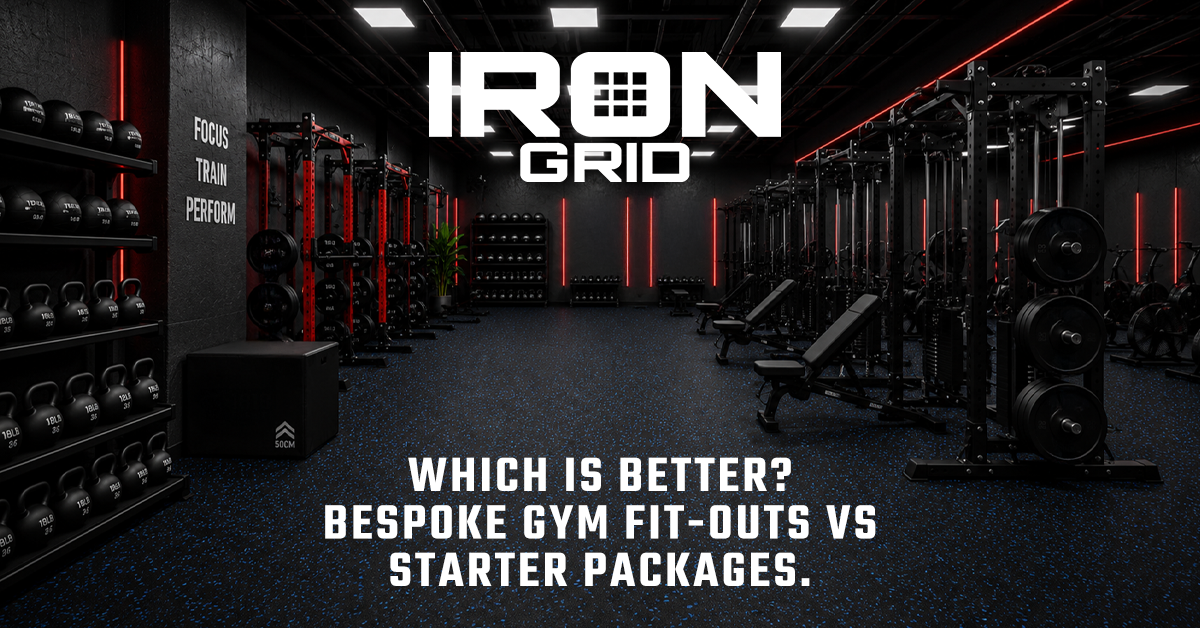
When opening a gym, one of the first decisions many owners face is whether to buy a starter package or plan a more bespoke fit-out.
On the surface, starter packages can look appealing. They feel simple, fast, and easy to understand. You are shown a bundle of equipment, a single number, and a seemingly straightforward path to launch. For some buyers, that feels less overwhelming than planning a full facility properly.
The problem is that gyms are not all the same.
A fight gym, a functional training facility, a boutique studio, and a broader commercial gym all have different operational needs, different training models, and different layout requirements. Once that reality becomes clear, many starter packages begin to show their limitations.
If you are building a serious training space in South Africa, the better question is not which option looks cheaper or easier up front. The better question is which option gives you a facility that actually works.
What Is a Starter Package?
A starter package is typically a pre-selected bundle of equipment designed to give gym owners a quick way to get moving.
It may include a mix of:
- cardio pieces
- strength equipment
- free weights
- benches
- storage
- functional accessories
The main selling point is convenience. Instead of building the facility item by item, the buyer is presented with a ready-made combination that appears to cover the basics.
That approach can sound attractive, especially for first-time owners who want to simplify decision-making. But convenience and suitability are not always the same thing.
What Is a Bespoke Gym Fit-Out?
A bespoke gym fit-out is planned around the actual facility, training model, and business goals of the project.
Instead of starting with a fixed bundle, the process begins with questions such as:
- what type of gym is being built?
- who is it for?
- how will members use the space?
- what training zones are needed?
- what equipment is essential to the operating model?
- what layout will support flow, coaching, and daily function?
From there, the fit-out is shaped around the needs of the space rather than around a generic package.
This usually leads to a more deliberate result. The equipment mix, flooring, storage, and layout all work together more coherently because they were selected in relation to the facility itself.
Why Starter Packages Can Look Attractive
Starter packages appeal to owners for a few understandable reasons.
They often seem:
- easier to compare
- faster to price
- simpler to approve
- less mentally demanding
- more accessible for first-time buyers
They also create the impression that the hard decisions have already been made.
For someone new to the process, that can feel reassuring. But that simplicity is often achieved by stripping out the more important questions around training flow, zoning, layout, and long-term facility performance.
A gym may be able to launch with a package. That does not necessarily mean it will launch well.
Where Starter Packages Often Fall Short
The biggest problem with starter packages is that they are built for convenience, not for the actual demands of a specific training environment.
That can create several issues.
They rarely reflect the real layout of the space
A package may include a good-looking mix of items, but it does not automatically account for:
- square meterage
- ceiling height
- traffic flow
- training lanes
- member movement
- storage needs
- sightlines for coaches
- equipment spacing
A good gym is not just a collection of products. It is a working environment.
They can overemphasise the wrong categories
A package may include equipment that looks impressive but does not meaningfully support the gym’s actual operating model. In some cases, a facility ends up with too much of one category and too little of another.
For example, a gym might get:
- too many fixed machines
- not enough functional space
- weak storage
- poor flooring choices
- an equipment mix that does not suit the target member
They encourage product-led thinking
Starter packages often push owners toward a retail mindset. The focus becomes what is included, how much it costs, and whether it feels like a good deal.
That is very different from asking:
- how will this gym run every day?
- what will members actually use?
- what will support revenue-generating services?
- what layout will make the facility feel professional?
These are the questions that usually matter more.
Why Bespoke Fit-Outs Usually Perform Better
A bespoke fit-out starts with the purpose of the gym and works outward from there.
That approach tends to produce better outcomes because the facility is designed around:
- training model
- member experience
- coaching flow
- safety
- durability
- business goals
- visual standard
- future growth
It is a more strategic way to build.
Instead of forcing the gym to adapt to a package, the fit-out is shaped to match the gym itself. That usually leads to a stronger balance between function, presentation, and long-term value.
Bespoke Does Not Mean Wasteful
Some owners assume that bespoke means automatically more expensive.
That is not always true.
A bespoke project can actually improve budget efficiency because it reduces the likelihood of spending on equipment that does not serve the facility properly. Rather than paying for a bundle that includes items you may not need, the budget is directed toward the categories that matter most.
That can mean:
- better allocation across zones
- less wasted spend
- stronger launch priorities
- more intelligent phasing of future additions
- a facility that feels more complete even without buying everything at once
Bespoke fit-outs are not about adding complexity for the sake of it. They are about making better decisions.
Different Gyms Need Different Solutions
This is where the difference becomes especially clear.
A fight gym may need:
- bags
- matting
- ring space
- conditioning tools
- striking and grappling zones
A functional training gym may need:
- sled lanes
- racks
- barbells
- open movement space
- versatile conditioning tools
A boutique studio may need:
- a smaller number of high-quality pieces
- a refined visual feel
- more deliberate spacing
- a calmer training environment
A commercial gym may need:
- balanced cardio
- strength zones
- free weights
- storage
- member flow across multiple training styles
Trying to solve all of those with the same package approach is usually where problems start.
The Layout Factor
Layout is one of the strongest arguments in favour of bespoke planning.
Even excellent equipment can feel wrong if it is badly arranged in the space. A bespoke fit-out considers:
- how members enter and move through the facility
- where congestion could happen
- what coaches need to see
- which zones should sit together
- where storage should be placed
- how the space should feel visually and operationally
This creates a much more functional environment than a package-led approach where layout is often considered later or only loosely.
Long-Term Value Matters More Than Short-Term Simplicity
Starter packages are usually sold on speed and simplicity.
But the better question is whether that simplicity still holds value six months after opening.
If the gym feels mismatched, overcrowded, under-equipped in key zones, or visually inconsistent, the short-term convenience quickly starts to look less attractive. At that point, the owner often ends up making reactive purchases, moving equipment around, or correcting earlier decisions that could have been avoided.
A bespoke fit-out usually performs better over time because it is built with the full operating reality of the facility in mind.
When a Starter Package Might Make Sense
There are cases where a package approach can still be useful.
For example:
- a very small facility with simple needs
- a temporary setup
- a low-complexity project where the owner fully understands the compromises
- an early-stage concept where only a basic launch is required
But even in these cases, it helps to review the package through the lens of layout, training function, and long-term goals. A package should still support the space rather than dictate it.
What Serious Gym Owners Should Prioritise
If you are building a gym that needs to feel credible, durable, and commercially sound, the priorities should usually be:
- a layout that works
- equipment that supports the training model
- good flooring and infrastructure
- clear zoning
- strong member flow
- storage
- future-ready planning
- a coherent visual standard
These are the areas where bespoke fit-outs usually outperform generic packages.
Final Thoughts
Starter packages can make gym planning look easier, but they often simplify the wrong part of the process.
The real challenge is not choosing a bundle. The real challenge is creating a facility that works well for the people using it, supports the business model properly, and feels strong from the day it opens.
That is why bespoke gym fit-outs usually deliver a better result for serious commercial spaces. They allow the facility to be planned around its real purpose rather than around a generic pre-selected combination of products.
For gym owners who want a training environment that feels deliberate, professional, and built to last, bespoke is usually the better path.
Planning a serious training space? Talk to Iron Grid about your project.
FAQ
What is the difference between a gym starter package and a bespoke fit-out?
A starter package is a pre-selected bundle of equipment. A bespoke fit-out is planned around the actual facility, layout, training model, and business goals of the gym.
Are bespoke gym fit-outs more expensive?
Not necessarily. Bespoke planning can often improve spending efficiency by focusing the budget on what the facility actually needs instead of including unnecessary items.
Why do starter packages sometimes fail?
Starter packages can fall short because they do not always reflect the layout, member profile, programming, or operational needs of the specific gym.
Which option is better for a serious commercial gym?
For most serious commercial gyms, a bespoke fit-out is usually the better option because it creates a more functional, coherent, and long-term facility.