
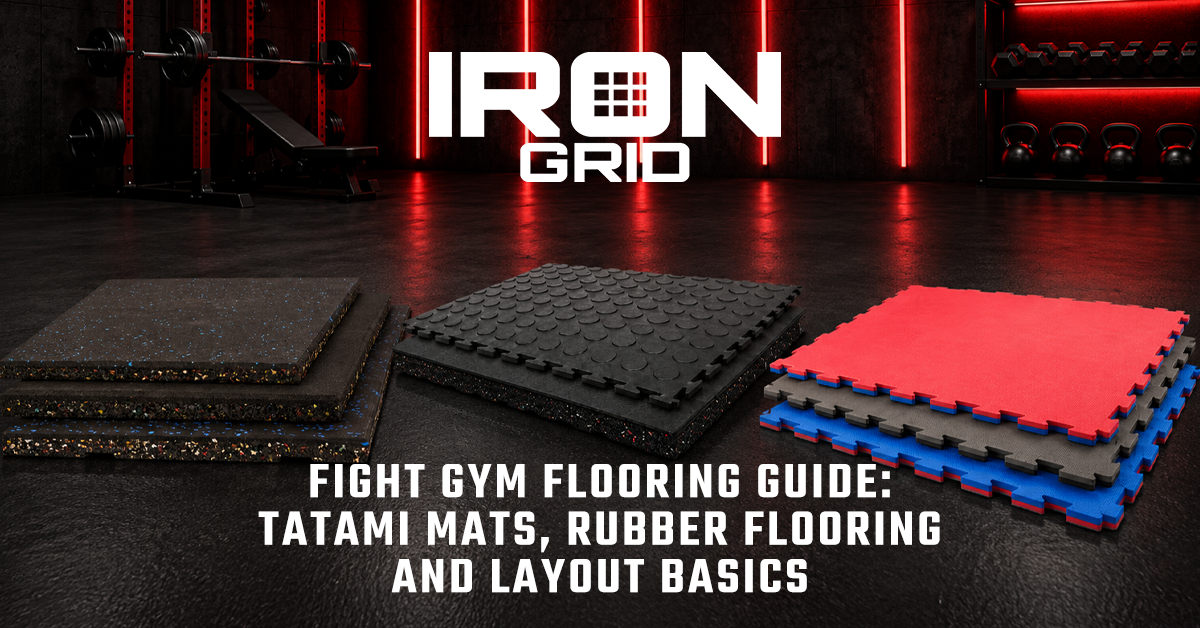
Fight Gym Flooring Guide: Tatami Mats, Rubber Flooring, and Layout Basics
Fight Gym Flooring Guide: Tatami Mats, Rubber Flooring, and Layout Basics
Flooring is one of the most important decisions in any fight gym, yet it is often treated as something secondary to the equipment itself.
That is usually a mistake.
In a serious combat sports facility, flooring affects far more than appearance. It influences safety, durability, movement quality, coaching flow, maintenance, and the overall feel of the space. A fight gym can have excellent bags, a strong ring setup, and good conditioning equipment, but if the flooring has not been planned properly, the facility will still feel compromised.
If you are planning a fight gym in South Africa, it helps to think about flooring as part of the full fit-out from the start. The right combination of tatami mats, rubber flooring, and layout planning can make a major difference to how well the gym works in day-to-day use.
Why Flooring Matters So Much in a Fight Gym
Combat sports place very specific demands on a training environment.
Unlike a standard commercial gym, a fight gym often needs to support multiple forms of movement in one facility. That can include:
- striking
- grappling
- takedowns
- pad work
- bag work
- conditioning
- warm-ups
- footwork drills
- partner training
Each of these creates different needs underfoot.
That is why fight gym flooring should never be treated as a purely cosmetic decision. It has a direct effect on:
- impact absorption
- grip and traction
- comfort during repetitive movement
- safety in takedown or grappling zones
- noise control
- wear and tear
- cleaning and upkeep
- overall professionalism of the facility
In a well-planned fight gym, the flooring supports the training model instead of working against it.
Start With the Type of Fight Gym You Are Building
Before deciding between tatami mats and rubber flooring, you need to be clear on the type of combat facility you are building.
A boxing gym has different flooring needs from an MMA gym. A Muay Thai-focused facility may need a different balance from a BJJ academy or a hybrid fight-and-conditioning gym. If the space will support multiple disciplines, the flooring strategy often needs to reflect that.
For example:
- a boxing-led gym may prioritise bag zones, ring space, and conditioning areas
- a BJJ or grappling facility may need a larger dedicated matted surface
- an MMA gym may require both grappling mats and striking-compatible support areas
- a hybrid facility may need clear transitions between matting and rubber zones
The best flooring decision is usually the one that matches the way the gym will actually be used every day.
What Tatami Mats Are Best For
Tatami mats are typically associated with grappling-based training environments and are often the right choice where groundwork, takedowns, throws, and drilling form a major part of the programme.
They are especially useful for:
- BJJ training
- judo-style movement
- wrestling drills
- MMA groundwork
- partner drilling
- takedown practice
- technical grappling classes
The main reason tatami mats are valuable in these environments is that they provide a more appropriate surface for impact and ground-based movement than standard hard flooring.
A serious mat area helps create:
- safer groundwork training
- better comfort during repeated drills
- a clearer technical training zone
- a more professional combat-sports feel
In many fight gyms, the mat area is not a minor feature. It is one of the defining functional zones in the facility.
What Rubber Flooring Is Best For
Rubber flooring is often the stronger choice in areas where durability, stability, and versatility are the priority.
It is commonly used in:
- conditioning zones
- free-weight areas
- sled lanes
- warm-up sections
- bag zones
- strength and accessory areas
- transition spaces around the gym
Rubber flooring usually performs well where the facility needs:
- a hard-wearing surface
- easier maintenance
- support for equipment placement
- good traction for movement
- cleaner transitions between training functions
In a fight gym, rubber flooring is often especially useful around the wider performance and conditioning side of the facility. If the gym includes air bikes, rowers, kettlebells, dumbbells, sleds, or strength stations, rubber flooring is often the more practical solution for those areas.
Why Most Serious Fight Gyms Need Both
One of the biggest mistakes in fight gym planning is assuming the whole facility should use one flooring type.
In reality, many serious fight gyms work best when the flooring is divided by function.
That often means:
- tatami mats in grappling and takedown zones
- rubber flooring in conditioning and strength zones
- ring flooring handled separately
- clear transitions between areas based on training style
This mixed approach usually creates a far stronger result because it allows each zone to perform properly.
A full tatami gym may not suit the conditioning side of the facility. A full rubber-floor gym may not support grappling safely or comfortably. A better solution is often to design the layout so the flooring reflects the way the space actually needs to operate.
How to Think About Layout Before Flooring
Flooring should not be selected in isolation.
Before making decisions on tatami mats or rubber flooring, it is important to think through the broader layout of the gym:
- where will classes happen?
- where will bag work happen?
- where will partner drills happen?
- will striking and grappling run at the same time?
- where could congestion build up?
- what zones need clear separation?
- how will coaches move through the space?
- where do members transition between training modes?
These questions help determine not only what flooring is needed, but where it should sit.
A strong layout gives the flooring logic. Without that, even good materials can feel awkward in practice.
Bag Zones, Mat Zones, and Conditioning Areas
In a well-planned fight gym, the floor often needs to support three major functions.
Mat Zones
These are usually the most important spaces for grappling, technical drilling, takedowns, and close-contact combat movement. This is where tatami mats usually make the most sense.
Bag Zones
Bag work needs stable, durable flooring and enough space for movement, footwork, and coaching visibility. In many cases, rubber flooring works well here, especially when the area also supports pad work or warm-up use.
Conditioning Areas
Modern fight gyms often include a conditioning component, whether for fighter preparation or general member fitness. That may include:
- sleds
- air bikes
- rowers
- kettlebells
- ropes
- dumbbells
- plyometric tools
These areas typically perform better with rubber flooring and a layout that allows for movement without interfering with the combat zones.
The Importance of Transitions Between Surfaces
When a gym uses more than one flooring type, the transitions between surfaces matter.
The layout should feel deliberate rather than patched together. Members should understand intuitively where each training function belongs. Coaches should be able to run sessions without awkward movement across mismatched surfaces. The gym should feel like one complete environment rather than several unrelated spaces.
That is why flooring decisions should be part of the initial fit-out planning rather than something adjusted later.
Safety, Maintenance, and Long-Term Use
The right flooring decision should also reflect the long-term realities of running a fight gym.
You should think about:
- how the floors will handle constant foot traffic
- how easy they are to clean
- how well they suit the training intensity of the facility
- how well they retain their quality over time
- how clearly different zones can be maintained
Fight gyms are hard-use environments. Flooring needs to do more than look good on opening day. It needs to perform week after week under real pressure.
Common Flooring Mistakes in Fight Gyms
A few mistakes come up repeatedly in combat facility planning.
Treating flooring as an afterthought
This usually creates compromises later in the fit-out and weakens the overall layout.
Using one surface for everything
This often ignores the fact that striking, grappling, and conditioning have different functional demands.
Underestimating space planning
Even strong flooring choices can feel wrong if the zones are badly laid out.
Prioritising price over training function
The cheapest short-term option is not always the best long-term facility decision.
Forgetting the conditioning side of the gym
Many fight gyms are no longer just combat-only environments. They often need to support broader physical training as well.
How to Approach the Flooring Decision Properly
A strong way to approach flooring is to work backward from the gym’s actual operating model.
Start with:
- the main combat disciplines
- the training structure
- the amount of grappling vs striking
- whether the gym includes strength and conditioning
- the shape and size of the space
- how many people will train at once
- the type of member experience you want the facility to deliver
From there, it becomes much easier to decide:
- how much mat space is needed
- where rubber flooring makes sense
- how the zones should relate to one another
- how the full gym should flow
Final Thoughts
Tatami mats and rubber flooring are not competing choices in the way many people assume. In most serious fight gyms, they serve different purposes.
Tatami mats are usually the right solution for grappling, takedowns, and technical close-contact training. Rubber flooring is often the better fit for conditioning, bag work, accessory equipment, and general high-durability support zones. The strongest facilities usually combine both in a way that reflects how the gym actually operates.
That is why the real decision is not simply which flooring type is best. The real decision is how to design the right flooring strategy for the full fight gym.
When the flooring, layout, and training model are aligned, the entire facility feels stronger.
Planning a serious fight gym? Talk to Iron Grid about your project.
FAQ
What is the best flooring for a fight gym?
The best flooring depends on the type of fight gym. Many serious facilities use a combination of tatami mats for grappling zones and rubber flooring for conditioning or support areas.
Are tatami mats good for MMA gyms?
Yes. Tatami mats are often a strong choice for MMA gyms where grappling, takedowns, and ground-based training are part of the programme.
Is rubber flooring suitable for boxing gyms?
Yes. Rubber flooring is often well suited to boxing-related support zones, bag areas, conditioning areas, and strength sections of the facility.
Should a fight gym use one flooring type throughout?
Not always. Many gyms perform better when flooring is divided by function, with different surfaces used for grappling, striking support, and conditioning.
Planning A Serious Training Space?
Speak to Iron Grid about equipment sourcing, layout planning and commercial-grade fit-out support.
Start Your Project →
How to Zone a Gym Properly for Flow, Safety, and Member Experience
A gym can have good equipment and still feel wrong. That usually happens when the space has not been zoned properly. Zoning…
Read Article →Common Mistakes When Opening a Gym
Common Mistakes When Opening a Gym Opening a gym is exciting, but it is also one of the easiest stages of a…
Read Article →Delivery & Installation: How to Get Your Facility Ready for Use Properly
Once the quote has been approved and the project is moving forward, the next stage is delivery and installation. This is the…
Read Article →